

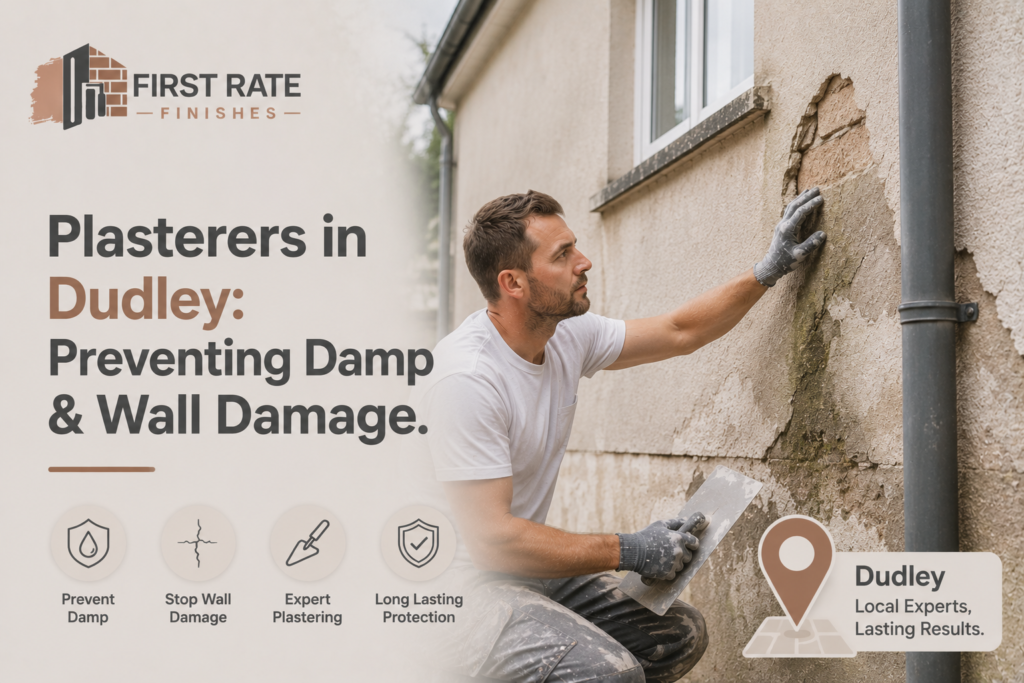
Damp problems are one of the most common issues homeowners face, especially in older properties or buildings exposed to constant moisture and poor ventilation. While damp may initially appear as a small patch on a wall or ceiling, it can quickly develop into peeling paint, mould growth, damaged plaster, and even structural issues if left untreated. This is why many homeowners rely on experienced plasterers in Dudley to identify early warning signs and carry out professional repairs before the damage becomes more serious.
In this blog, we’ll explain how damp affects your walls, the warning signs to look out for, and how professional plastering services help protect and restore your property.
What Causes Damp Problems in Homes?
Damp can occur for several reasons, and understanding the source is the first step toward preventing long-term damage.
Common Causes of Damp Include:
- Leaking pipes or roofing
- Poor ventilation in kitchens and bathrooms
- Rising damp from the ground
- Cracked exterior walls or damaged render
- Condensation build-up inside the property
- Faulty guttering and drainage systems
When moisture enters the walls, it weakens plaster over time and creates the perfect conditions for mould and deterioration.
Signs of Damp Damage on Walls
Damp does not always appear immediately, but there are several common warning signs homeowners should watch for:
Peeling Paint or Wallpaper
Moisture trapped behind surfaces causes paint and wallpaper to bubble, peel, or lift away from the wall.
Cracked or Crumbling Plaster
Damp weakens plaster, leading to cracks, flaking, and surface deterioration.
Discoloured Patches
Yellow, brown, or dark stains often indicate hidden moisture problems inside the wall.
Mould and Musty Smells
Persistent damp areas encourage mould growth and unpleasant odours, especially in poorly ventilated rooms.
Cold or Wet Walls
Walls affected by damp may feel colder or slightly wet to the touch compared to surrounding areas.
Why Damp Problems Should Be Addressed Quickly
Ignoring damp can lead to much bigger and more expensive issues over time. Moisture continues spreading if the underlying cause is not resolved, potentially affecting both the appearance and structural condition of the property.
Untreated damp can result in:
- Severe plaster damage
- Mould and mildew growth
- Weakening of wall surfaces
- Damage to paint and decorations
- Poor indoor air quality
- Increased repair costs later on
Acting early helps protect your property and prevents more extensive restoration work.
How Professional Plasterers Help Prevent Damp Damage
Experienced plasterers do much more than simply repair damaged surfaces. They help identify the root cause of moisture problems and restore walls properly to prevent future issues.
1. Assessing the Condition of the Walls
A professional inspection helps determine whether the dampness is caused by leaks, condensation, or structural issues. This ensures repairs target the actual source of the problem.
2. Removing Damaged Plaster
Any weakened, crumbling, or mould-affected plaster is carefully removed to stop the damage from spreading further.
3. Preparing and Treating the Surface
Walls are dried thoroughly and treated where necessary before new plaster is applied. This helps improve adhesion and long-term durability.
4. Applying Fresh Plaster Finishes
Once the wall is prepared, new plaster is applied smoothly to restore the appearance and strength of the surface.
5. Preventing Future Moisture Problems
Professional plasterers can also recommend ventilation improvements, sealing work, or additional repairs to help reduce future damp risks.
The Importance of Hiring Experienced Professionals
Damp-related plaster damage should never be treated as just a cosmetic issue. Covering the surface without solving the underlying problem often leads to recurring damage.
This is why many homeowners choose trusted plasterers in Dudley who understand how to properly repair and protect walls affected by moisture. Professional workmanship ensures smooth finishes, durable repairs, and long-term protection for your property.
Tips to Help Prevent Damp Problems at Home
While professional repairs are important, regular maintenance can also reduce the risk of damp problems developing.
Useful Prevention Tips:
- Improve ventilation in bathrooms and kitchens
- Repair leaks and gutter issues quickly
- Keep external walls maintained
- Use extractor fans where needed
- Avoid drying clothes indoors without ventilation
- Check for early signs of cracks or moisture regularly
Early action can prevent major plaster damage and expensive repairs later.
Final Thoughts
Damp problems can seriously affect both the appearance and condition of your property if left untreated. From peeling paint and mould growth to weakened plaster and damaged walls, moisture issues should always be addressed as early as possible. Professional plastering services play a vital role in repairing damaged surfaces and preventing further deterioration.
For homeowners looking for reliable plastering solutions, First Rate Finishes provides professional plastering and wall repair services designed to restore and protect your property. Their experienced team focuses on high-quality workmanship, smooth finishes, and long-lasting results to help keep your walls in excellent condition for years to come.