

Your home’s walls and ceilings are constantly exposed to movement, temperature changes, and moisture. While plaster is designed to be durable, it doesn’t last forever. Over time, even well-finished surfaces can begin to show signs of damage that go beyond simple wear and tear.
The challenge for most homeowners is knowing when a small issue is harmless and when it’s time to bring in a professional. Ignoring early warning signs can lead to more serious structural problems and higher repair costs later on.
In this detailed guide, we’ll break down the key signs that indicate it’s time to call experienced plasterers, helping you protect your home and maintain a high-quality finish.
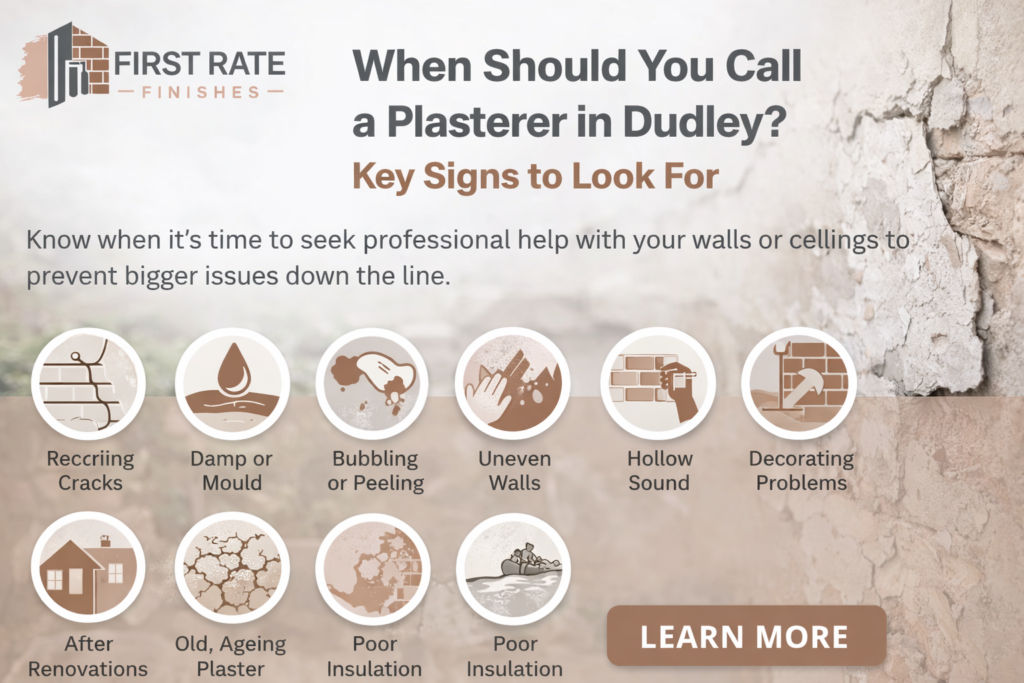
1. Cracks That Keep Coming Back or Getting Worse
Cracks are often the first visible sign that your plaster needs attention. While hairline cracks can sometimes appear naturally as a property settles, recurring or widening cracks should never be ignored.
What to look for
- Cracks that reappear after being filled
- Long cracks running across walls or ceilings
- Cracks forming around doors, windows, or corners
What it means
These cracks may indicate movement within the building or weakened plaster that is no longer holding properly. Simply filling them without addressing the root cause will only provide a temporary fix.
A professional plasterer will not only repair the surface but also stabilise the area to prevent further cracking.
2. Damp, Mould, or Persistent Moisture Issues
Moisture is one of the biggest enemies of plaster. Once water penetrates the surface, it can break down the material, leading to long-term damage.
Common warning signs
- Damp patches that don’t dry out
- Black mould or mildew growth
- Staining or discolouration on walls
- A musty smell in certain rooms
Why this matters
Damp doesn’t just affect appearance; it can compromise the strength of your walls and even impact your health. Before replastering, the source of the moisture must be identified and resolved.
Experienced plasterers in Dudley will ensure proper preparation, including drying and treating affected areas before applying new plaster.
3. Bubbling, Peeling, or Flaking Surfaces
If your walls or ceilings are starting to bubble, peel, or flake, it’s a clear sign that the plaster underneath is failing.
Causes include
- Trapped moisture beneath the surface
- Poor adhesion from previous plastering work
- Age-related deterioration
What happens if ignored
The damage will continue to spread, leading to larger areas of loose plaster that may eventually fall away. This not only looks unsightly but can also create safety concerns.
Professional repair ensures the damaged areas are removed and replaced with a strong, stable finish.
4. Uneven Walls and Visible Imperfections
A high-quality plaster finish should be completely smooth and level. If your walls appear uneven or rough, it may be due to poor workmanship or gradual deterioration.
Signs to watch for
- Visible bumps, dips, or ridges
- Uneven surfaces highlighted by lighting
- Difficulty applying paint or wallpaper evenly
Why it matters
Uneven plaster affects your home’s overall appearance and makes decorating more difficult. Re-skimming can restore a perfectly smooth finish, instantly improving the look of your space.
5. Hollow or Drummy Sound When Tapped
A lesser-known but important sign of plaster failure is a hollow sound when tapping the wall.
What this indicates
- The plaster has detached from the underlying surface
- Weak bonding due to age or poor application
- Possible hidden moisture damage
The risk
Detached plaster can eventually collapse, especially in larger sections. This makes early detection and repair essential.
A professional plasterer will remove unstable areas and reapply plaster securely for a long-lasting solution.
6. Frequent Decorating Issues
If you’ve recently painted or wallpapered your walls and the results don’t last, the problem may not be the paint; it could be the plaster underneath.
Common issues include
- Paint peeling or cracking shortly after application
- Wallpaper is not sticking properly
- Uneven finishes despite careful decorating
The solution
Good plaster provides the foundation for all decorative finishes. Without a smooth and stable surface, even the best paint or wallpaper won’t look right.
Replastering ensures a solid base that enhances and extends the life of your decoration.
7. Damage After Renovation or Structural Work
If you’ve recently carried out building work such as an extension, loft conversion, or wall removal, your plaster may need professional attention.
Why this happens
- Structural changes can cause movement
- New surfaces need finishing
- Old and new areas need to blend seamlessly
What to expect
A professional plasterer will ensure a consistent finish throughout your home, making new work indistinguishable from existing surfaces.
8. Ageing Plaster in Older Properties
Older homes often have plaster that has naturally degraded over time. While it may still be intact, it can lose strength and durability.
Signs of ageing plaster
- Fine cracks across large areas
- Powdery or brittle surfaces
- Dull, worn appearance
Why it’s important
Refreshing old plaster not only improves appearance but also reinforces the structure and prepares your home for modern decoration.
9. Increased Energy Loss or Poor Insulation
In some cases, damaged or outdated plaster can contribute to poor insulation within your home.
Indicators
- Cold walls
- Higher heating bills
- Draughts or temperature inconsistencies
The benefit of repair
Modern plastering techniques, including insulated drylining, can improve thermal efficiency and make your home more comfortable and cost-effective to run.
Why Acting Early Makes a Difference
One of the biggest mistakes homeowners make is delaying repairs. What starts as a minor crack or damp patch can quickly become a larger, more expensive issue.
By calling professional plasterers in Dudley at the first sign of trouble, you can:
- Prevent further structural damage
- Reduce long-term repair costs
- Maintain the value of your property
- Ensure a safe and comfortable living environment
The Value of Professional Expertise
While DIY solutions may seem appealing, plastering requires skill, precision, and experience. A professional plasterer will:
- Properly prepare surfaces before applying plaster
- Use the right materials for each situation
- Deliver a smooth, durable, and long-lasting finish
- Identify and resolve underlying issues
This level of expertise ensures that the problem is fixed the first time properly.
Final Thoughts
Your walls and ceilings are a key part of your home’s structure and appearance. Recognising the warning signs early can save you from costly repairs and unnecessary stress.
From cracks and damp to uneven surfaces and ageing plaster, each issue is a signal that your home may need professional attention. Acting quickly ensures your property remains in excellent condition and continues to look its best.
If you notice any of these signs, don’t wait for the problem to worsen. Bringing in experienced plasterers at the right time will not only restore your walls but also give you peace of mind knowing your home is in safe hands.